An litir dhearg
Stay up to date! Receive a newsletter from us to keep up with the campaigns.
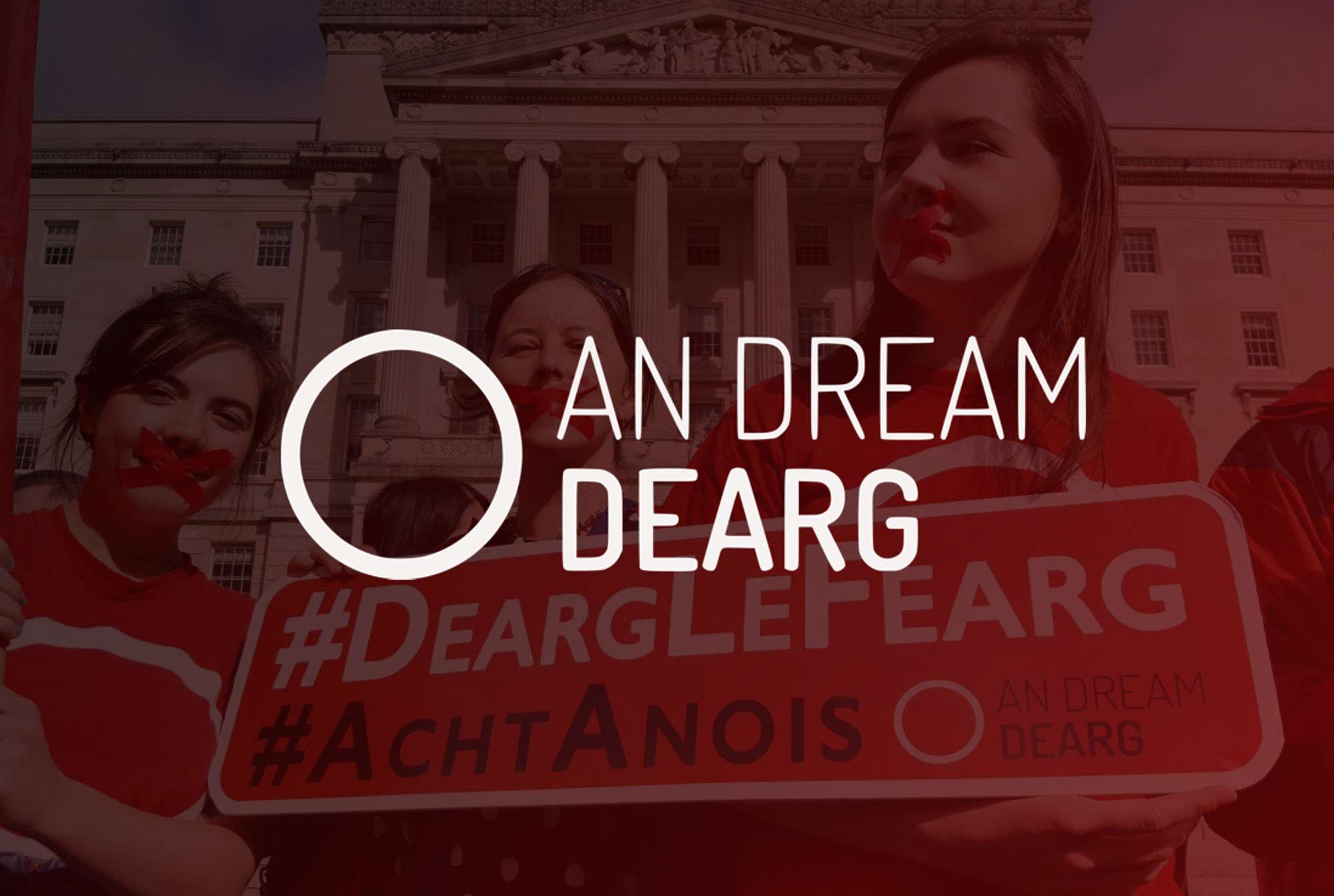

Armagh, Banbridge and Craigavon Council preside over the most restrictive and draconian dual-language street naming policies anywhere in the north, setting their threshold at 66% of residents of any street in the council area. Last year, for the first time ever, residents of streets in Portadown overwhelmingly endorsed the erection of dual-language signs, surpassing the incredibly restrictive thresholds set out in the council’s policy.
Unfortunately, a DUP MP and Portadown Orange Lodges formally objected to those street signs applications being supported by Council. The MP in question, Carla Lockhart, missed her first sitting day in Westminster to oppose a street sign where 100% of responding residents voted in favour of the sign, claiming to be protecting the “finely balanced good relations in the area” & avoid raising “tensions”.
Further correspondence from local Orange Lodges now reveal they had submitted to ABC Council their ‘serious’ concerns around “community cohesion”, “tensions”, “division” in two further Portadown streets, claiming dual-language street signs are “provocative” that do “nothing to promote community integration” and could “potentially derail” the “peaceful co-existence in the area over recent years."
It is crucial that, firstly, we very clearly differentiate between the erection of dual-language street signs, and orange marches in this area. Dual-language signs represent a very physical manifestation of equality, where the original, usually indigenous variant of placenames are restored to the public space beside their transliterated, anglicised, English-language versions.
The process for erecting those signs are set out in statute in the 1995 Local Government Order, devolving powers to local councils to bring forward procedures to canvass residents, and are established and supported by international treaties and charters across the world. The only equivalent to Irish language on a street sign is English language on a street sign, which, interestingly, requires no local consent, survey or procedures.”
It is impossible, however, to read the remarks of both the DUP and the Orange Order and not see them in contrast with their new attempts to march down the Garvaghy Road. Ironically, they seem to totally disregard their feigned concern for ‘tensions’, ‘division’,’ community relations’, ‘peaceful coexistence’ and ride roughshod over the longstanding rights of the Garvaghy Road residents.
The intervention of the Orange Order in relation to dual language signs is outrageous but not surprising, given their long and sorry history of vehement opposition to linguistic equality. The Irish language continues to flourish however and this is, finally, being reflected in increased visibility for our native language, which was for too long invisible and abolished across society.
The huge support for bilingual signage across the north is testament to a miraculous community revival and exposes the hypocrisy of the Orange Order who, on the one hand want to force a parade down the Garvaghy Road, which has historically led to violence and disorder on our streets, yet on the other seek to deny bilingual signage where there is overwhelming public support - and doing all of this in the interest of ‘community relations’.
The Orange Order, in recent weeks, has claimed to espouse an approach rooted in human rights and equality. Pull back the curtain and that could not be further from the truth. Their grounds of objection to dual-language street signs lays bare an organisation steeped in cultural supremacy. The days of the Orange Order exercising any kind of veto of language rights are long gone, and are never coming back.
The solution is simple: councils should have clear policies reflective of best practice standards when it comes to bilingual signs and when democratically agreed thresholds have been met, those signs should be erected.
Stay up to date! Receive a newsletter from us to keep up with the campaigns.